artisti

Jérôme Bel
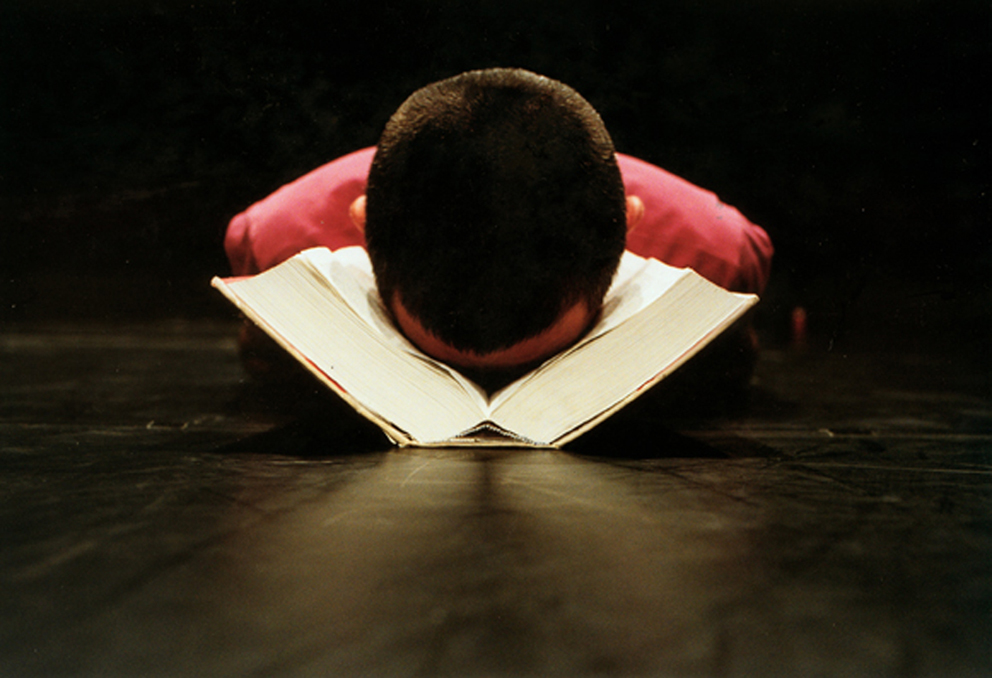
Jérôme Bel, coreografo e regista francese, vive a Parigi e lavora a livello internazionale. L'insieme della sua opera coreografica si pone in osservazione delle convenzioni dello spettacolo, analizzandolo nella sua pura materialità. Dopo gli studi al Centre National de Danse Contemporaine di Angers e varie esperienze come danzatore, ha dato vita alle sue prime creazioni, Nom donné par l'auteur (1994), Jérôme Bel (1995) e Shirtology (1997), che esplorano il grado zero della danza. Con The last performance (1998)cerca di definire un'ontologia della performance. Seguono il solo Glossolalie, scritto per lui da Myriam Gourfink, e lo spettacolo Xavier Le Roy (2000) firmato da Bel ma in realtà creato daXavier Le Roy, indagine sulla proprietà intellettuale. The show must go on (2001), performance corale per 19 canzoni pop, 20 interpreti e 1 dj, dopo una tournèè mondiale entra nel repertorio della Deutsches Schauspielhaus di Amburgo. Nel 2004 è invitato a produrre uno spettacolo per il balletto dell'Opéra di Parigi, Veronique Doisneau, che apre una nuova prospettiva di lavoro con la serie di produzioni che interrogano l'esperienza e il sapere degli interpreti: Véronique Doisneau (2004), Isabel Torres (2005), Pichet Klunchun and myself (2005), Lutz Förster (2009) e Cédric Andrieux (2009). Nel corso del 2009 pubblica l'edizione multimedia su piattaforma web Catalogue raisonnè, 1994-2005. Segue 3Abschied (2010), una collaborazione tra Anne Teresa De Keersmaeker e Jérôme Bela partire da Das Lied von der Erde di Gustav Mahler. Nel 2010 mette in scena Un spectateur, pièce interpretata dallo stesso Jérôme Bel in cui ricostruisce le esperienze che lo hanno segnato come spettatore. La ricerca sulla democratizzazione della danza prosegue con Disabled Theater (2012) con il Theater Hora, compagnia di attori professionisti con disabilità intellettiva, e Cour d'honneur (2013), che porta in scena 14 spettatori nella Corte d'Onore del Palazzo dei Papi di Avignone. Nel 2013 viene pubblicato il libro Emails 2009-2010, scritto con il coreografo francese Boris Charmatz (Les Presses du Réel). InGala (2015), il coreografo riunisce sulla scena professionisti della danza e amatori provenienti da contesti diversi. In Tombe (2016), spettacolo creato su invito dell'Opéra National de Paris, Jérôme Bel ha proposto ad alcuni danzatori del balletto di invitare, per un duo, la persona con cui non avrebbero mai condiviso il palcoscenico. Posé arabesque, temps lié en arrière, marche, marche (2017) è un lavoro per i danzatori del Ballet de l’Opéra de Lyon, basato sul celebre "Atto delle ombre" del balletto La Bayadère. Dancing as if nobody is watching (2018) e la lettura della Lecture on Nothing di John Cage invitano a un atteggiamento estetico contemplativo. Con Retrospective, Bel ripercorre il proprio archivio video attraversando il corpus delle sue opere per far emergere il legame tra danza e politica. Isadora Duncan(2019) traccia un ritratto della celebre coreografa. Dal 2019 Jérôme Bel e la sua compagnia non viaggiano più in aereo; gli spettacoli successivi vengono quindi creati, prodotti e portati in tournée secondo un nuovo paradigma.Dances for Wu-Kang Chen (2020) è un ritratto del danzatore taiwanese, Xiao Ke (2020) è uno spettacolo creato con la coreografa di Shanghai, e Laura Pante (2020) ripercorre la carriera della danzatrice e performer italiana. Jérôme Bel ha lavorato alla sua auto-bio-coreo-grafia Jérôme Bel (2021) con l'idea che all'estero venisse interpretata da un artista locale nella lingua del proprio paese. Per Dances for an actress (Valérie Dréville) (2020) eDans voor actrice (Jolente de Keersmaeker) (2021), Jérôme Bel ha chiesto a queste due attrici di teatro di interpretare alcune danze della modernità coreografica. Non human dances(2023), ideato con la storica dell'arte Estelle Zhong Mengual, analizza il rapporto tra la storia della danza occidentale e il non-umano. La sua ultima creazione è la piattaforma online Jérôme Bel 1994-2026 (2027).
www.jeromebel.fr www.jeromebel1994-2026.fr
Jerome Bel, french artist and choreographer, lives in Paris and works worldwide. His first piece, a choreography of objects, is entitled nom donné par l'auteur (1994). The second one, Jerome Bel (1995), is based on the identity and the total nudity of the four performers. Shirtology (1997) presents an actor wearing many shop-bought T-shirts. The last performance (1998), which quotes a solo by the choreographer Susanne Linke, as well as Hamlet and André Agassi, tries to define an ontology of the performance. The piece Xavier Le Roy (2000) was claimed by Jérôme Bel as his own, but was actually made by the choreographer Xavier Le Roy. The show must go on (2001) brings together twenty performers, nineteen pop songs and one DJ. Véronique Doisneau (2004) is a solo on the work of the dancer Véronique Doisneau, from the Paris Opera. Isabel Torres (2005), for the ballet of the Teatro Municipal of Rio de Janeiro, is its Brazilian version. Pichet Klunchun and myself (2005) was created in Bangkok with the Thai traditional dancer Pichet Klunchun. Follows Cédric Andrieux (2009), dancer of Merce Cunningham. 3Abschied (2010) is a collaboration between Anne Teresa De Keersmaeker and Jérôme Bel based on The Song of the Earth by Gustav Malher. Disabled Theater (2012) is a piece with a Zurich-based company, Theater Hora, consisting of professional actors with learning disabilities. Cour d'honneur (2013) stages fourteen spectators of the Cour d'honneur of the Palais des Papes in Avignon. In 2013, Emails 2009-2010, written with the French choreographer Boris Charmatz, is edited (Les Presses du Réel). InGala (2015), the choreographer stages together professional people from the dance field and amateurs coming from different backgrounds. In Tombe (2016), performance created at the invitation of Opéra National de Paris, Jérôme Bel proposed to some dancers of the ballet to invite, for a duet, the person with who they would never share the stage. Posé arabesque, temps lié en arrière, marche, marche (2017) is a piece for all the dancers of the Ballet de l’Opéra de Lyon based on the famous "Entrance of the shadows" of the ballet La Bayadère. Dancing as if nobody is watching (2018) and the reading of theLecture on nothing by John Cage call for a contemplative aesthetic attitude. WithRetrospective, Jérôme Bel goes back through his video archives and makes a cross section within his corpus, to bring out the linkage between dance and politics. Isadora Duncan (2019) paints a picture of this choreographer. Since 2019, Jérôme Bel and his company no longer travel by plane, and it is with this new paradigm that his latest performances have been created, produced and toured. Thus, Dances for Wu-Kang Chen (2020), a portrait of this Taiwanese dancer, Xiao Ke (2020), a performance created with this Shanghai-based choreographer, and Laura Pante (2020), which presents the career of this dancer-performer living in Italy, were all rehearsed by videoconference. These pieces are performed in the language of each dancer and tour in their respective countries. Jérôme Bel worked on his auto-bio-choreo-graphy Jérôme Bel (2021), with the idea that it would be performed abroad by an actor in the language of his or her country, using a protocol, script and videos. ForDances for an actress (Valérie Dréville) (2020) and Dans voor actrice (Jolente de Keersmaeker) (2021), Jérôme Bel asked these two actresses to interpret, not the roles of the theatrical repertoire as they are used to, but rather certain dances from the choreographic modernity. Non human dances (2023), conceived with the art historian Estelle Zhong Mengual, analyses the relationship between the history of Western dance and the non-human in order to enrich our understanding of it. His last creation is the online platform Jérôme Bel 1994-2026 (2027).