art work

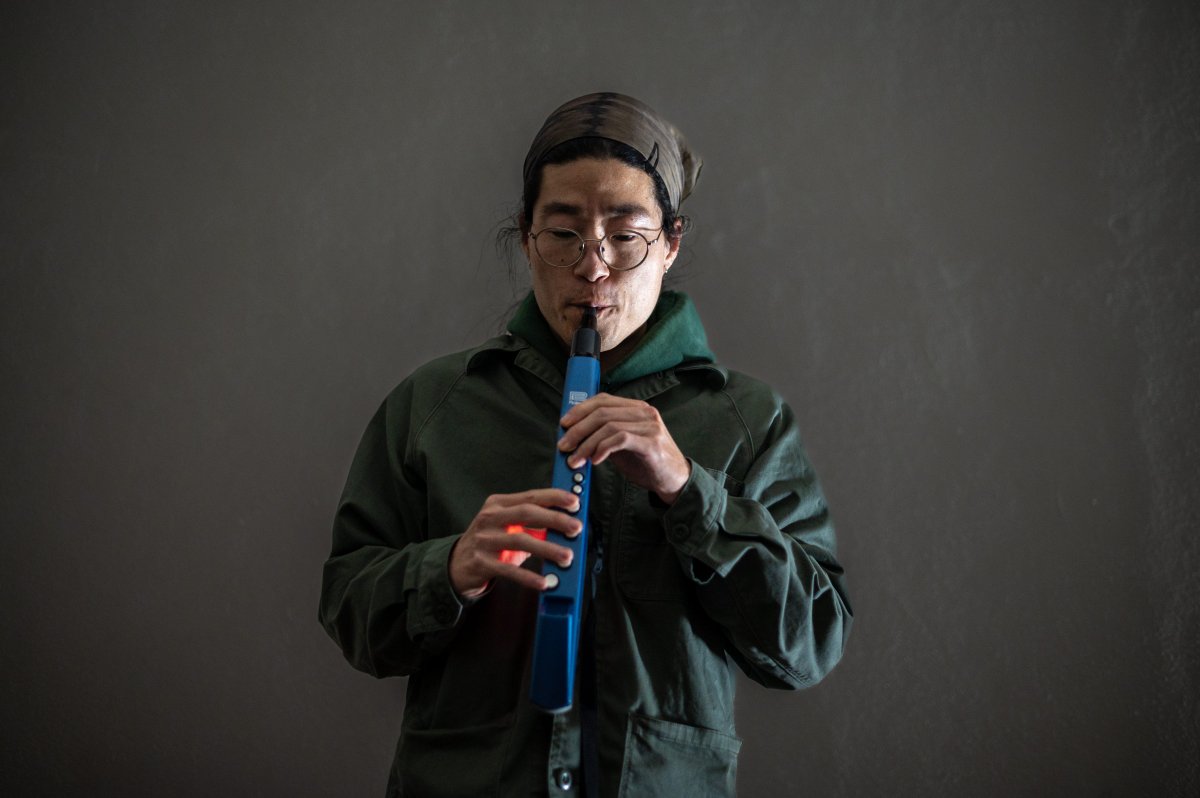


Fragments from EXISTENZ
Sunik Kim
Giovedi 26 febbraio 2026 Xing ha presentato a Raum Fragments from EXISTENZ: The Third Malformation, Or Combinatorial Rotation of The City / The Tunnels / The House / The Beach (Fragment 3.1 Folio X “ANOMALY”), sound performance del musicista e scrittore coreano Sunik Kim, per la prima volta in Italia.
Con EXISTENZ (fragments from), dopo un’ampia ricerca sul compositore Conlon Nancarrow, Sunik Kim continua ad esplorare il tempo e la durata e a lavorare sulla micro-mutazione delle strutture e delle forme attraverso una musica in costante movimento, o meglio in stato di erosione e ristrutturazione.
Accostandosi alla visione dell’artista concettuale Hanne Darboven, che usava i numeri “solo perché è un modo di scrivere senza descrivere” (nulla a che fare con la matematica), Sunik Kim propone un'esperienza musicale astratta da condividere nell'ascolto. I flussi numerici sono architetture del tempo arbitrarie, ovvero dei sistemi continui che rappresentano sia il flusso della vita che un ordine onnicomprensivo. Sunik Kim utilizza patches e tools da lui progettati, in direzione di uno smantellamento dei limiti della computer music contemporanea. Attraverso la diffusione multicanale ed effetti psicoacustici cerca di fondere la percezione temporale e spaziale dei suoni presentati all’ascoltatore in una stratificazione mnemonica, dove materiali sonici semplici vengono portati fin quasi all'esaurimento.
Fragments from EXISTENZ è una performance sonora radicale, che ci invita a travalicare il concetto di Spettacolo per seguire gli impulsi elettromagnetici che trasformano una “musica in cui siamo già stati prima” rompendone le forme e dispiegandole in un tempo soggettivo.
Oltre alla musica, presentata per la prima volta dal vivo, Sunik Kim ha scritto per l’occasione un saggio - a disposizione di chi ha partecipato alla sound performance a Raum - che delinea le riflessioni che compongono questo nuovo corpus di opere. Leggere il saggio - e rileggerlo - è un modo per illuminare lo spazio mentale che ha prodotto questa musica profondamente meditata e la sua ecologia interna.
“Se il mio lavoro recente è stato venato da una sorta di ottimismo esausto – alla ricerca di potenzialità sempre più prossime al punto zero – infilando materia morta in fasci e reticoli – oggi sono interessato ad attraversare quello zero, alla ricerca di una musica di negatività attiva. Ogni giorno sono torturato, da un lato, dalla totale incapacità della musica di alterare le relazioni sociali se non come merce, e, dall'altro, dalla sensazione che siamo solo all’inizio delle possibilità di “sentire musica”. La musica che propongo in questa fase è un tentativo di tracciare quella contraddizione: non una rottura, ma un'irruzione nel limite che questa contraddizione presenta. [...]
Penso a una musica scritta su altra musica, così come l'attività pratica degli umani scrive sulla natura: una grafia collettiva quasi illeggibile fatta di scarabocchi e tratteggi. [...]
Nel contesto dell'orrore, non è un ritiro dal mondo, ma l'unica speranza di rimanere con esso. Si tratta di leggere continuamente il mondo, le sue iscrizioni: la lettura attenta diventa una modalità specifica di cura, il metodo per salvarsi. Ma la lettura attenta porta con sé un pericolo: quello che il mondo diventi semplicemente un testo, una mappa e, quindi, un gioco. [...] Penso alla serie di videogiochi horror Resident Evil, in cui il giocatore, in tempo reale, ricostruisce lo spazio nella propria mente e ne attraversa le architetture. [...] Anche la musica costruisce spazi nella mente. E se vivessimo la musica come una traversata o una navigazione attraverso uno spazio?“ (frammenti dal testo di accompagnamento di Sunik Kim)
***
Thursday 26 February 2026 Xing presented at Raum Fragments from EXISTENZ: The Third Malformation, Or Combinatorial Rotation of The City / The Tunnels / The House / The Beach (Fragment 3.1 Folio X “ANOMALY”), sound performance by Korean musician and writer Sunik Kim, for the first time in Italy.
With EXISTENZ (fragments from), after their extensive research on the composer Conlon Nancarrow, Sunik Kim continues to explore time and duration and to work on the micro-mutation of forms, through music in constant motion, or rather in a state of erosion and restructuring.
Following the vision of conceptual artist Hanne Darboven, who only used numbers "because it is a way of writing without describing” (nothing to do with mathematics), Sunik Kim proposed an abstract musical experience of shared listening. Numerical flows are arbitrary architectures of time, that is, continuous systems that represent both the flux of life and an all embracing order.
Kim deploys patches and tools they have designed, dismantling the limitations of contemporary computer music. Through multichannel diffusion and the exploration of psychoacoustics, they seek to merge the temporal and spatial perception of the sounds in the mnemonic layering of the listener. Simple sonic materials are led by Kim almost to the point of exhaustion.
Fragments from EXISTENZ is a radical sound performance that invites us to transcend the concept of Spectacle and follow the electromagnetic impulses that transform a "music we've been through before," breaking (and subjectively recomposing) its forms as they unfold over time.
Along with the music, presented live for the first time, Sunik Kim has written an essay for the occasion - available to those attending the sound performance at Raum - outlining the suggestion and reflections that make up this new body of work. Reading the essay - and rereading it - is an insightful way of entering and understanding the headspace that produced this deeply considered music and its inner ecology.
"If my recent work has been tinged with a kind of optimism in exhaustion—seeking out the potentials nearer to the swoop of zero——I am increasingly interested in traversing that zero in search of a music of active negativity. Every day I am tortured by, on the one hand, the total inability of music to alter social relations except as commodity, and, on the other, the feeling that we have barely begun to hear music. This music is an attempted tracing of that contradiction: not a breaking-through, but a breaking-into the limit that this contradiction presents. [...]
I'm thinking of music written on music like the practical activity of humans writes upon nature: in the scribbles and strokes of our collective “scrawling hand”.
In the context of horror, it's not a retreat from the world, but the only hope of remaining with it. It's about continuously reading the world, its inscriptions: close reading becomes a specific mode of care, a method for our survival. But close reading bears a danger within itself: that of the world simply becoming a text, a map, and, therefore, a game. [...]
A nexus for these concerns became, against all expectations, the horror video game series Resident Evil, in which the player, in real time, reconstructs the space in their mind and traverses its architectures. The door to safety is shut. There is no turning back. You must survive in order to expose this nightmare... [...]
Music, too, constructs spaces in the mind. What would it feel like to experience music as a traversal or navigation through a space? What would it feel like to experience music as “going through something”—surviving against all odds?" (fragments from the accompanying essay by Sunik Kim)